Thinking about a Dachshund? Here's the honest Australian owner's guide — what they're really like to live with, what to feed them, what goes wrong, and what it all costs.
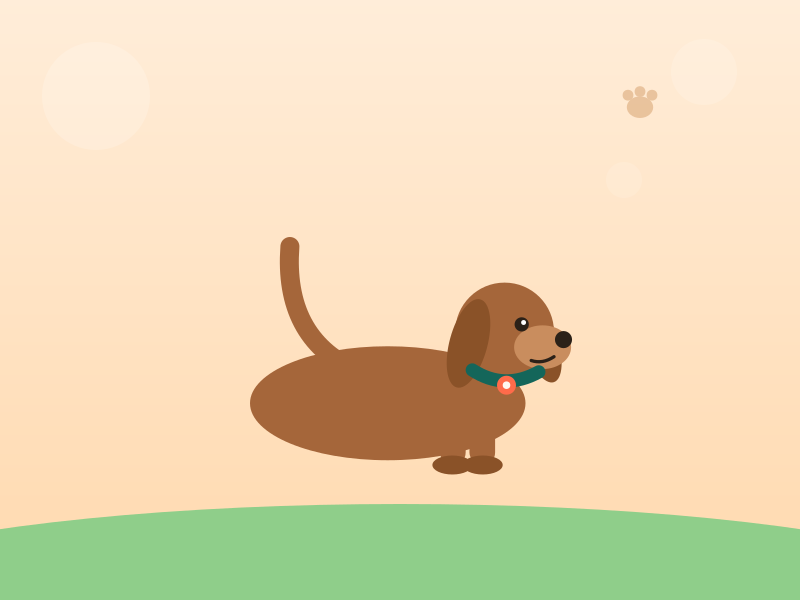
Dachshunds are small, long-bodied dogs with bold personalities, and they’re a popular choice in Australian homes. They come in standard and miniature sizes, with smooth, long-haired and wire-haired coats. Many owners are drawn to their loyalty and compact size, but the breed has specific needs to consider before committing.
This guide covers what Dachshunds are like to live with day to day, from temperament and exercise to training, diet and grooming. It also explains the health problems the breed can be prone to, particularly back issues, and outlines the typical costs Australian owners can expect.
Key takeaways
- Dachshunds are loyal, confident dogs that need consistent, patient training and regular moderate exercise.
- A balanced diet, healthy weight and careful handling help protect their long backs from injury.
- Owners should budget in AUD for the purchase price, food, grooming, vet care and possible back treatment.
Dachshund quick facts 📋
| Feature | Details |
|---|---|
| Weight | 4–12 kg |
| Lifespan | 12–16 years |
| Daily exercise | 30–60 minutes |
| Grooming | Minimal; weekly brushing for long or wire coats |
| Shedding | Low to moderate |
| With children | Suits families with older kids |
They’re a small, medium-energy breed with low grooming needs.
Temperament: what's a Dachshund really like? 💛
Dachshunds are brave, stubborn and funny, with a confident personality packed into a small, long body.
- Loyal: they bond closely with their family
- Watchful: they’re wary of strangers and bark to alert
- Housetraining: progress can be slow, so owners need patience and consistency
Daily activity & back care 🏃
Dachshunds do well with two walks of 20–30 minutes each day. Just as important is protecting their long spine:
- Provide ramps for couches and beds
- Limit stair use
- Keep them lean, since extra weight strains their back
Best Food Choices for a Dachshund 🍖
A small-breed kibble, fed in carefully measured portions, suits most Dachshunds best. Extra body weight puts more strain on their long spine.
- Choose formulas with glucosamine and chondroitin for joint support
- Weigh meals using kitchen scales
- Count treats as part of the daily intake
Keeping a Dachshund lean helps protect their back and joints.
Keeping a Dachshund groomed ✂️
Smooth coats need very little upkeep, while long and wire coats need a brush once a week.
Every Dachshund needs:
- A weekly check of its long ears
- Regular nail trims
Owners are better off buying a ramp than grooming gadgets.
Typical health issues and life expectancy 🩺
Dachshunds usually live for 12 to 16 years. Their long backs make intervertebral disc disease (IVDD) the main concern. Roughly one in four dogs is affected at some point in their life.
Australian claims data shows the conditions owners most often seek cover for:
| Condition | Why it affects Dachshunds | Typical vet cost (AUD) |
|---|---|---|
| IVDD (slipped disc) | Around 1 in 4 dogs affected | $7,000–$12,000 for spinal surgery |
| Patellar luxation | Kneecaps can slip out of place in short legs | $2,000–$4,000 per knee |
| Dental disease | Teeth crowd together in a small jaw | $500–$1,500 per year |
| Cushing's disease & skin problems | Hormonal conditions become more common with age | $1,000–$2,500 per year, ongoing |
Keeping a Dachshund at a healthy weight reduces strain on the spine. Ramps are also a good alternative to letting the dog jump off furniture.
How much does a Dachshund cost in Australia? 💰
A Dachshund puppy from a registered breeder usually costs $2,500–$4,500. Ads offering much lower prices are often scams or linked to puppy farms, so buyers are better off steering clear.
| Expense | Typical cost (AUD) |
|---|---|
| Puppy from a registered breeder | $2,500–$4,500 |
| Accident and illness insurance | $60–$110 per month |
| Setup and first year | $3,000–$5,000 |
The first-year figure generally covers vaccinations, desexing, microchipping, council registration, a crate, bedding and food.
Does a Dachshund suit your household? ✅
- Exercise: 30–60 minutes a day, so think about whether your routine allows for it.
- Food: Small-breed kibble with joint support, served in measured portions to protect the spine.
- Weight: Extra kilos increase this breed's health risks.
- Main health concern: IVDD (slipped disc). Ramps and limited jumping can help reduce strain on the back.