Cat enrichment gives your cat safe ways to hunt, climb, scratch, hide, explore, solve problems and connect on their own terms. It is not a house full of toys or constant entertainment. The best setup gives your cat choice, predictable resources and activities they genuinely enjoy.
If your cat ambushes ankles, races through the house at midnight or scratches the sofa, a single miracle toy is unlikely to explain or solve the whole pattern. Start with the environment, add small opportunities for natural behaviour and watch how your cat responds. A confident young cat may want fast chasing games; an older or worried cat may prefer an easy food search and a secure window perch.
The quick-start version
- Offer safe retreats and let your cat choose whether to join in.
- Use short hunting-style play sessions with a toy your cat can catch.
- Provide stable climbing, scratching and hiding options.
- Use part of the normal measured food allowance for food games.
- Enrichment supports wellbeing—it does not replace rest or veterinary and behaviour care.
What is cat enrichment?
Cat enrichment means improving a cat's environment and daily opportunities so they can express natural behaviours and experience positive challenges. The RSPCA's responsible cat ownership guidance highlights choice about where to rest, play and toilet, along with opportunities to stalk, pounce, climb, scratch, hide, retreat and explore.
A useful veterinary framework is the five pillars of a healthy feline environment: a safe place; multiple and separated key resources; play and predatory behaviour; positive, predictable human interaction; and respect for a cat's sense of smell and other senses. That means enrichment is broader than toys. A cardboard retreat, an accessible litter tray and an undisturbed sleeping spot can matter just as much as a puzzle feeder.
Why is cat enrichment important?
Contained cats depend on people to provide variety, activity and control over their surroundings. A suitable setup can encourage movement, exploration and play while reducing frustration. Safe containment also needs to work for the cat, not simply prevent roaming.
More stimulation is not automatically better. Strong fragrance, unpredictable handling, forced contact and unavoidable competition can add stress. Give your cat options, introduce changes gradually and protect quiet time.
30 cat enrichment ideas to try
You do not need all 30. Choose one environmental improvement and one or two activities, begin with an easy version and rotate what works.
Hunting and play enrichment
- Create a wand-toy hunt. Move a wand toy away from your cat in short darts, pauses and hiding motions. Let them stalk and catch it repeatedly, and keep the line away from their neck.
- Offer a kicker toy. For cats that enjoy grabbing and bunny-kicking, choose a sturdy, appropriately sized fabric toy without loose decorations. Replace it if seams open or filling escapes.
- Roll a lightweight ball. Send a cat-safe ball across a non-slip floor or into a shallow box. Try different speeds and let your cat bat and capture it rather than keeping every game out of reach.
- Play hide-and-pounce. Move a wand toy behind the edge of a chair or cardboard box so your cat can watch, wait and pounce. Avoid using your hands or feet as prey.
- Rotate a small toy library. Keep a few suitable toys out and store the rest. Swap them based on your cat's interest, while leaving familiar comfort objects available.
- Make a cardboard play maze. Join plain boxes with cat-sized openings and place a sturdy toy inside. Remove tape, staples and string, and supervise cats that chew cardboard.
- Finish the hunt with a catch. End active play with a physical toy your cat can capture, followed by a small part of their normal meal if it fits the routine. This gives the sequence a clear finish.
Food and foraging enrichment
- Scatter a measured portion. Place a small amount of your cat's usual dry food in a clean, accessible area and let them search. Keep food away from litter trays and household hazards.
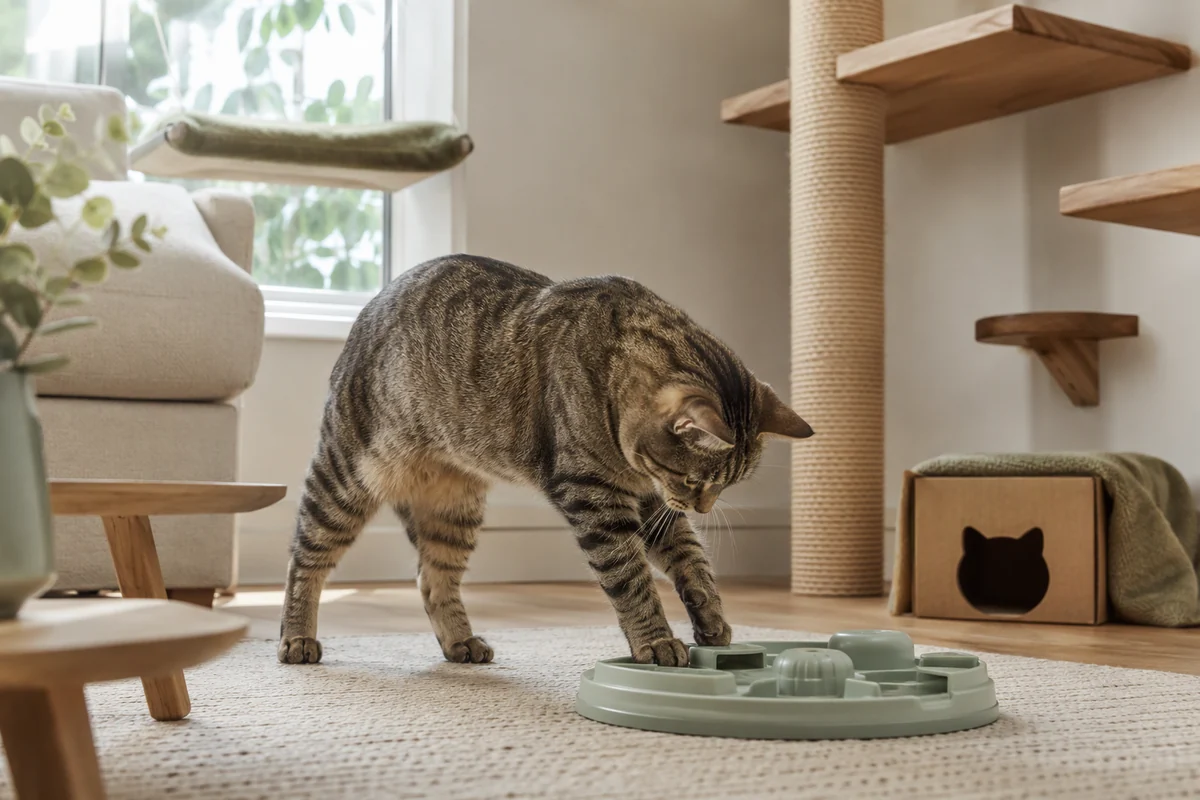
- Start with an open puzzle feeder. Use a shallow, easy design so food is visible and simple to reach. Increase difficulty only if your cat stays engaged and continues eating comfortably.
- Build a cardboard food puzzle. Put a few pieces of dry food in a plain egg carton or shallow box with large cardboard compartments. Supervise, remove loose scraps and stop if your cat eats the packaging.
- Fold food into a pet towel. Sprinkle dry food over a dedicated towel and fold it loosely. Begin nearly open, supervise and avoid this game if your cat chews or swallows fabric.
- Offer small, separated feeding stations. Divide the normal ration into suitable locations rather than adding extra food. In multi-cat homes, prevent one cat from watching or blocking another.
- Hide an easy food prize. Let your cat watch you place a small portion beside a box or perch, then encourage exploration. Keep hiding places accessible and gradually add novelty only if they enjoy the search.
- Try a wet-food lick mat. Spread a thin layer of your cat's usual suitable wet food over an easy-to-clean mat. Include it in the daily allowance and wash the mat after use.
Climbing, scratching and environmental enrichment
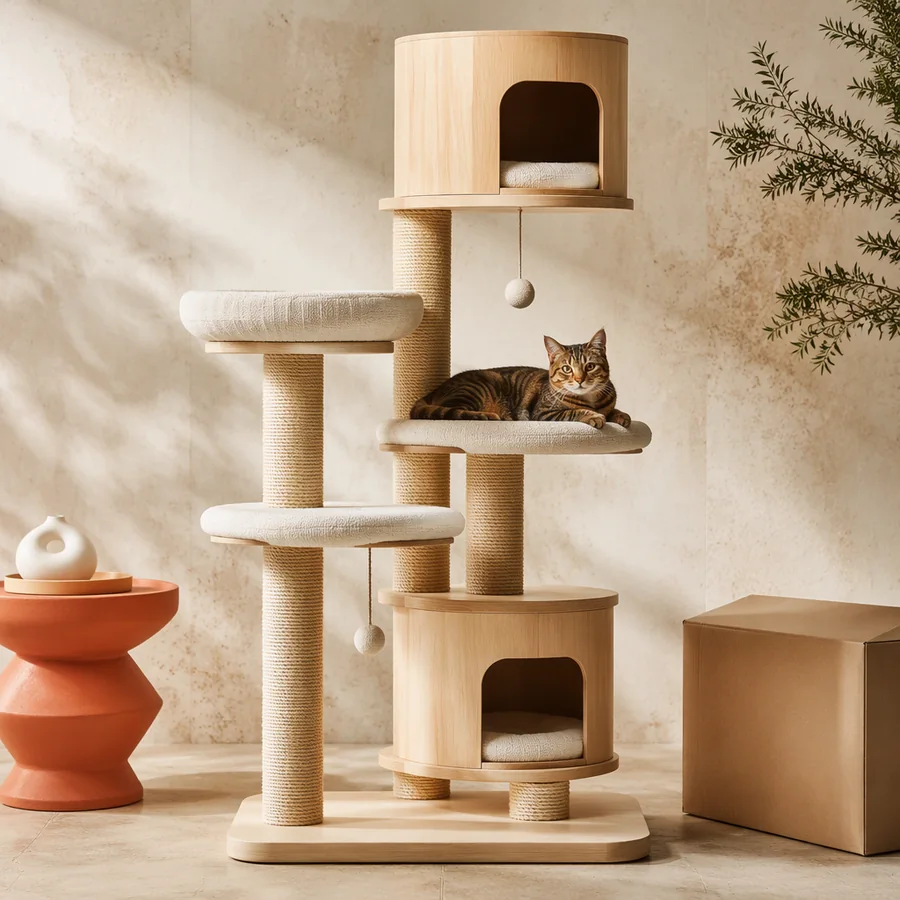
- Install a secure window perch. Give your cat a stable place to watch outdoor activity, away from open windows and unsafe balcony access. Provide an easy route up and down.
- Create a vertical route. Use a sturdy cat tree or properly secured shelves with non-slip surfaces. Avoid forcing a single narrow route where another pet can trap your cat.
- Provide a cardboard retreat. Place a plain box on its side or with a comfortable opening in a quiet area. Let your cat use it without being lifted out or disturbed.
- Add a tunnel. Use a stable cat tunnel for hiding, chasing and exploration. Choose one without loose wires or attachments and store it safely if it becomes damaged.
- Offer a tall scratching post. Choose a stable post that allows a full stretch and place it where your cat already likes to scratch. Reward investigation rather than punishing normal scratching.
- Add a horizontal scratcher. Some cats prefer scratching flat or angled surfaces. Offer a suitable texture near sleeping or scent-marking areas and replace it when it breaks down.
- Use a secure outdoor enclosure. An escape-proof catio or contained veranda can add fresh air, sounds and safe exploration. Provide shade, water and an easy return indoors, and follow local containment requirements.
Sensory, training and social enrichment
- Test catnip or silver vine optionally. Offer a small amount on a suitable toy and observe. Not every cat responds; skip it if your cat becomes agitated, and avoid adding competition between cats.
- Grow cat-safe grass. Use seed sold for pet grass and keep other houseplants out of the game unless their safety is confirmed. Prevent access to toxic plants and never use essential oils as scent enrichment.
- Set up safe wildlife viewing. A secure window can provide visual interest without letting your cat hunt wildlife. If watching causes agitation or repetitive behaviour, adjust the view and offer another activity.
- Teach nose targeting. Present your hand or a target stick briefly, then reward a voluntary approach or gentle touch with a suitable reward. Keep sessions tiny and stop if your cat walks away.
- Practise the name game. Say your cat's name once in a calm setting and reward attention or approach. Make it easy and positive rather than repeatedly calling when they are resting.
- Make the carrier a familiar space. Leave a secure, appropriately sized carrier open with familiar bedding and occasional rewards. Build voluntary exploration gradually instead of only bringing it out before travel.
- Offer choice-based grooming. If your cat enjoys it, begin with a soft brush in a preferred area for a few seconds and let them leave. Stop for tension, skin pain, matting or avoidance and seek advice where needed.
- Share predictable quiet time. Sit nearby, speak softly or offer affection when your cat approaches. Short, consistent interaction on their terms can be more valuable than forced cuddles.
- Protect an undisturbed rest zone. Provide a comfortable bed away from traffic, loud appliances and other pets. Rest and choice are part of a healthy enriched environment.
Looking for a ready-made option?
Choose for your cat's play style, mobility and experience—not the flashiest feature list. Compare practical options in our Australian dog and cat enrichment toy guide.
Match enrichment to your cat
| Your cat | Good starting points | Watch out for |
|---|---|---|
| Kitten | Short chasing games, safe climbing, easy puzzles and gentle reward-based handling | Small parts, strings, exhaustion and forced social experiences |
| Active or athletic cat | Varied hunting play, vertical routes, training and secure outdoor exploration | Unsafe heights, repetitive intensity and frustration without a catch |
| Senior cat | Accessible perches, gentle play, easy food searches and predictable company | Pain, reduced mobility, sensory changes and sudden behaviour changes |
| Worried or newly adopted cat | Quiet retreats, predictable routines, easy choices and optional interaction | Forced contact, abrupt home makeovers and unavoidable novelty |
| Cat with reduced mobility | Low routes, non-slip surfaces, accessible resources and gentle cognitive games | High jumps, slippery floors and activities that cause pain; ask your vet for individual guidance |
| Multi-cat household | Separated resources and individual activities tailored to each cat | Food competition, blocked pathways, staring, guarding and forced shared play |
Our apartment living guide covers small-space layouts. If you are increasing activity to help with weight management, use a veterinary plan and see our Australian cat weight guide; never crash-diet a cat.
A realistic indoor cat enrichment routine
There is no universal schedule. Use this example as a starting point and adjust it to your cat's health, preferences, sleep and household rhythm.
| When | Simple option | Purpose |
|---|---|---|
| Morning | A short wand-toy hunt with several successful catches | Interactive play and predatory behaviour |
| Breakfast | Part of a measured meal in an easy puzzle | Foraging and problem-solving |
| During the day | Safe window access, hiding places and separated essentials | Choice, exploration and security |
| Evening | Another brief play session or gentle training | Activity and positive interaction |
| Quiet time | Optional grooming or company, then an undisturbed retreat | Social choice and recovery |
In hot weather, keep activity and outdoor-enclosure time appropriate to conditions, with shade, ventilation, fresh water and immediate access back indoors. Flat-faced, older, overweight and medically vulnerable cats may need extra caution; follow your vet's advice.
Enrichment in a multi-cat home
Cats that live together are not necessarily a social group. A good layout lets each cat eat, drink, toilet, rest, scratch and play without being watched, chased or cornered.
- Separate key resources instead of placing every bowl, tray and bed in one room.
- Provide more than one route to important areas and avoid dead ends where possible.
- Feed cats separately when needed, and do not ask them to compete for one puzzle.
- Offer individual interactive play as well as optional shared activities.
- Preserve familiar scents and resting places when introducing new furniture or animals.
The 2024 AAFP intercat tension guidelines emphasise separated resources, individual preferences, predatory-play opportunities and predictable interaction. Persistent blocking, staring, attacks, hiding or house-soiling deserves professional assessment rather than simply adding more toys.
When “boredom” might be something else
Overgrooming, hiding, aggression, night-time vocalisation, appetite changes, restlessness, scratching new locations and house-soiling can have medical, pain, fear or social causes. Enrichment may form part of the response, but it should not delay diagnosis.
- Arrange a veterinary check for new, persistent or escalating changes.
- Seek prompt veterinary advice for straining to urinate, repeated unproductive litter-tray visits, distress, not eating or other acute symptoms.
- Track when the behaviour occurs and whether another pet, noise, resource or routine change precedes it.
- Introduce one manageable change at a time so you can see what helps.
Enrichment safety rules that matter
- Supervise new items. Remove loose bells, eyes, feathers, strings and damaged parts; store wand toys out of reach after play.
- Make food count. Use the measured daily ration where practical and avoid unbalanced homemade food mixtures.
- Check ingredients and plants. Review our guide to foods toxic to dogs and cats in Australia and never use essential oils for scent enrichment.
- Keep puzzles easy at first. Walking away, agitation or not eating means the activity needs adjusting or removing.
- Secure heights and outdoor spaces. Use stable furniture, safe window screens and professionally appropriate escape-proof containment.
- Protect choice and rest. Never pull a cat from a hiding place to participate, and let sleeping cats sleep.