
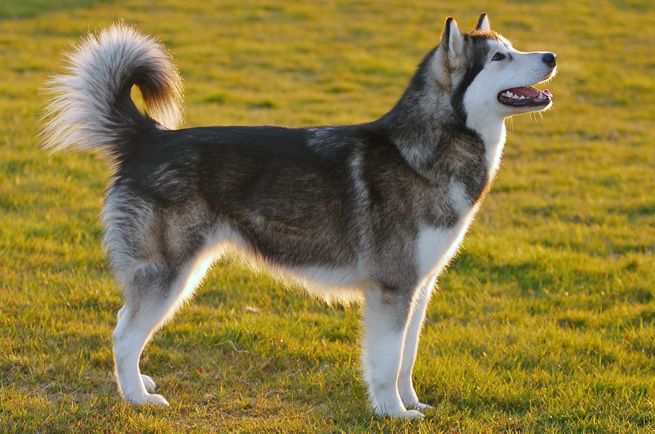
Alaskan Malamute
The Alaskan Malamute is a powerful, Arctic sled dog built for endurance and strength. One of the oldest Arctic breeds, they are dignified, affectionate with family and playful — but also wilful, vocal and extremely energetic. Not a beginner's dog.
About
The Alaskan Malamute is a powerful, Arctic sled dog built for endurance and strength. One of the oldest Arctic breeds, they are dignified, affectionate with family and playful — but also wilful, vocal and extremely energetic. Not a beginner's dog.
History
One of the oldest Arctic dogs, the Alaskan Malamute was bred by the Mahlemut Inuit of Alaska for hauling heavy loads over long distances. They were used in both polar expeditions of the early 20th century and served in World War II. The breed was recognised by the American Kennel Club in 1935.
Care & Health
The Malamute needs an experienced owner. Hip dysplasia screening is essential. They are escape artists and diggers — secure fencing is non-negotiable. Their double coat insulates them from both cold and heat; shaving it removes this protection and should never be done.
Quick Facts
- Origin
- United States (Alaska)
- Life Span
- 10–14 years
- Size
- large
- Hair Shed
- heavy
- Grooming
- Daily during shedding, weekly otherwise
- Good with Kids
- high
- Exercise Needs
- high
- Feeding Cost
- $25–$35 p/w
- Colours
- Light grey through black, sable and red. Always with white on the underbody, parts of legs, feet and facial markings.
Exercise
Exercise needs: high
Needs two or more hours of vigorous exercise daily. Running, hiking and cart-pulling are ideal. A bored Malamute will destroy your home.
Health Considerations
Recommended Insurance for Alaskan Malamute
The Alaskan Malamute is generally a healthy breed, but owners should be aware of conditions common to the breed.
- ■Hip Dysplasia — typical treatment cost: $3,000–$8,000
- ■Hypothyroidism — typical treatment cost: $300–$800/year ongoing
- ■Chondrodysplasia — typical treatment cost: $1,000–$5,000+
- ■Day Blindness — typical treatment cost: $1,000–$5,000+
A comprehensive pet insurance policy can help cover the cost of diagnostics, surgery and ongoing treatment for these conditions. Many Australian providers offer plans starting from around $30–$60 per month for larger breeds, with annual benefit limits of $10,000–$25,000.
🛡️ Don’t wait until it’s too late
Pre-existing conditions are never covered. Insuring your Alaskan Malamute while they’re young and healthy gives you the broadest coverage at the lowest premium.
Compare the best pet insurance options for your Alaskan Malamute →Grooming
Double coat sheds heavily twice a year. Daily brushing during blow-out seasons.